US +1 408 412-3813

Explore Folio3

Explore Folio3

×

Agentic AI, computer vision, generative AI

Web, mobile, and custom software

Engineering, warehousing, analytics

Farm, livestock, and crop software

Traceability and food supply chain

EHR, telehealth, and interoperability

ERP implementation and support

Dynamics 365 and Business Central

CRM consulting and integration

B2B ecommerce, ERP integrations and migrations
Cloud ERP for Manufacturers, $50M to $500M Revenue

Cloud ERP for Mid-Market Manufacturers, Built on Dynamics 365

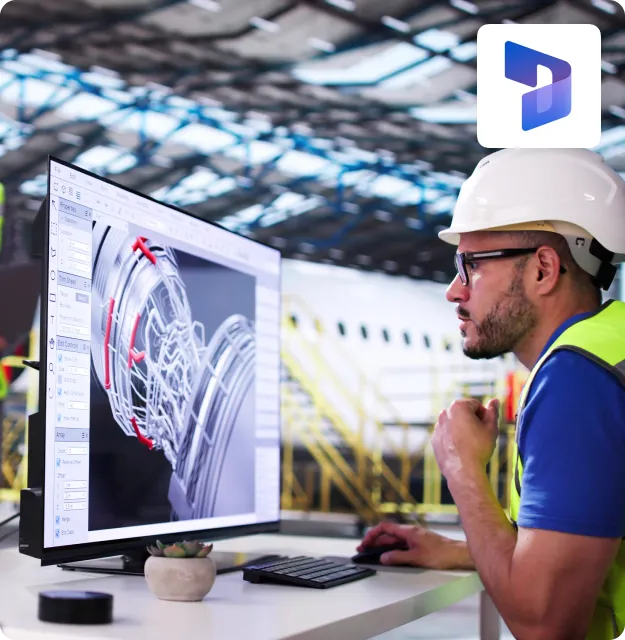
Folio3 Dynamics helps mid-market manufacturers implement Dynamics 365 with the right tier for the operation. That means Business Central for simpler setups, and Finance and Operations for plants running mixed-mode production, multi-entity finance, or regulated traceability. Cost transparency before you sign, and no workarounds on go-live day.

Trusted by food, agriculture, and pharmaceutical operations

The Problem

Why Most Mid-Market Manufacturers Land on the Wrong Cloud ERP

The typical shortlist puts you between three bad options. Every one of them locks in a partner-side or platform-side failure on day one, and you spend the next two years managing around it.

The Small-Business Tier Runs Out of Room

You buy a system built for simpler operations because it fits today. Twelve months in you add a second legal entity, or a process manufacturing line, or a regulator asking questions about lot control. The workarounds start. By year two you're running spreadsheets alongside a six-figure ERP investment, and nobody wants to reconcile at close.

The Enterprise Tier Is Overbuilt

You get quoted on SAP S/4HANA or Oracle Cloud. The scope and cost are both sized for a company three times your revenue. Two years in, you're spending more managing the platform than running the business, and go-live keeps slipping.

Single-Mode Platforms Handle Half Your Plant

Discrete-only or process-only ERPs handle exactly what they were built for. The other half of the plant runs on spreadsheets, ISV extensions, or a second system nobody wants to reconcile at close, and the costing model drifts until nobody trusts the reports anymore.

Proud Microsoft Solutions Partner

The Solution

One Platform, Two Tiers, Matched to How You Actually Operate

Dynamics 365 is Microsoft's manufacturing-grade ERP. It runs across two tiers licensed for the mid-market. Business Central covers simpler operations. Finance and Operations covers operations with real complexity, like a plant running mixed-mode production or a company that has to consolidate multiple legal entities. Which tier fits is a diagnostic question, and that's what the assessment answers.

tier one

Business Central

Cloud-native ERP for single-site manufacturers running discrete assembly with straightforward financials. Faster to stand up, and often the right call for mid-market operations where the setup is straightforward.

Company size

SMB to mid-market

Complexity

Standard to moderate

Deployment

Cloud-native

Manufacturing

Discrete assembly, light process

Multi-entity

Basic consolidations

Rapid Start timeline

60 to 90 days

Tier Two

Finance and Operations

Enterprise-grade ERP for manufacturers with mixed-mode production, multi-entity finance, or regulated traceability. The same platform Fortune 500 manufacturers rely on, configured for mid-market scale.

Company size

Mid-market to enterprise

Complexity

High, multi-mode

Deployment

Global, multi-currency

Manufacturing

All four production modes

Multi-entity

Native intercompany, global tax

Standard timeline

6 to 9 months

Core Configurations

Three Configurations Every Mid-Market Manufacturer Needs

These are the three configurations we deliver most often for mid-market manufacturers. Each is a native Dynamics 365 capability, with no ISV extension or third-party add-on required.

Platform Capabilities

What Dynamics 365 Gives You Out of the Box

Six capabilities that ship with Dynamics 365 and get configured during standard implementation. Nothing gets held back for a separate project or a next phase, and nothing depends on a third-party add-on.

Copilot for Supply Chain

Natural-language planning queries, AI-driven warehouse picking, and Copilot Studio agents that draft supplier correspondence and flag lead-time exceptions. All of it ships with the Dynamics 365 release cadence, so it's part of the platform your implementation configures, and there's no separate AI project to scope.

Migration From AX, NAV, GP, and SAP ECC

Structured migration paths off every legacy Dynamics or SAP system as Microsoft's support clock runs out. AX extended support ended in January 2023. GP new license sales stopped in April 2025, and NAV 2016 reaches end of life in April 2026. SAP ECC mainstream maintenance runs out in 2027. Every migration starts with a scoped assessment before the cutover date gets set.

Plant-Floor Integrations

Shop-floor systems talking to your ERP: MES, SCADA, WMS, EDI, and 3PL platforms. Microsoft's standard connectors cover most of them, and Folio3's BURQ iPaaS platform covers what Microsoft doesn't. Middleware you don't want to maintain stays out of the picture.

Consolidated Finance and Tax

Multi-entity, multi-currency consolidations on a shared chart of accounts, with country-specific regulatory frameworks handled through native configuration in the platform. Your close runs on the same system as your shop floor.

Demand and Supply Planning

MRP and master planning across bills of materials and purchase orders, with AI-driven demand forecasting on top. Weekly ops reviews get built from natural-language queries against live data, so ad-hoc BI work isn't the bottleneck anymore.

Rescue for Failing Implementations

Not every failed implementation needs a rip-and-replace. The team runs a scoped audit of where the project stalled, keeps the configuration that's working, and rebuilds the parts that aren't. Much of the practice's work is rescuing Dynamics 365 projects that ran over budget or missed go-live.

Get Started

Book a Demo

Book a demo with a Folio3 Dynamics manufacturing lead. Walk through Dynamics 365 configured for your operation. Bring your questions.

Implementation Timelines

How Long a Dynamics 365 Finance Implementation Takes

Timelines depend on scope. The two most common engagement types and their typical durations:

Business Central, Rapid Start

60 to 90 days

Business Central, Full-Scope

6 to 18 months

Finance and Operations, Standard

6 to 9 months

Finance and Operations, Full-Scope

1 to 3 years

Cost depends on entities, integrations, customization, and data migration. Scoped cost and timeline are confirmed during the ERP Complexity and Value Assessment before any statement of work is signed.

Proof

Anonymized Mid-Market Manufacturer

Awaiting technical brief from engineering. Metrics requested: WIP inventory accuracy, financial close cycle time, and scrap reduction. Placeholder below shows the format this section will publish in.

Problem statement

The client was using Magento for eCommerce and D365 FSM for backend operations and faced challenges with manual data syncing between the two systems, leading to errors and inefficiencies. To support business growth, they sought to automate data synchronization and streamline operations.

Solution we offered

Burq iPaaS streamlined the integration between Magento and D365, syncing product details, inventory, prices, orders, and customer accounts. It also ensured seamless product mapping and streamlined data flow across both systems.

The Outcome

It significantly impacted TricorBraun process efficiency by over 95%. They were able to achieve near real-time data synchronization between their systems with a 100% data accuracy rate.

Results

Reduction in financial close cycle time
0 %
WIP inventory accuracy improvement
0 %

OUR WORK

Trusted Microsoft Dynamics Partner

Gold Microsoft Dynamics partner with solid foundations and experienced professionals

Start Your QuickBooks to Business Central Migration

Get a scoped timeline from our Business Central migration services team before you commit to anything.

Common Questions
Things Mid-Market Manufacturers Ask Before Getting Started

Should we go with Business Central or Finance and Operations?

It's driven by how the operation runs, and company size is only loosely correlated. Business Central fits single-site discrete operations with straightforward financials. Finance and Operations fits operations with mixed-mode production, multi-entity finance, regulated traceability, or plant-floor integrations at scale. Your ERP Complexity and Value Assessment produces a tier recommendation before any contract.

It depends on which options you're comparing. Acumatica and NetSuite lead on financials for simpler operations, but they need extensions for process manufacturing and multi-entity operations at scale. Epicor Kinetic has strong discrete manufacturing with lighter native financials and AI. Dynamics 365 covers all four production modes with enterprise-grade financials and native Copilot on one platform. Your specific fit depends on which of those you actually need, and that's what the assessment resolves.

It depends on the path. Business Central Rapid Start goes live in 60 to 90 days on fixed scope, and full-scope Business Central engagements typically run 6 to 18 months. Finance and Operations standard implementations run 6 to 9 months, and full-scope Finance and Operations engagements typically run 1 to 3 years across a phased rollout. Your ERP Complexity and Value Assessment produces a scoped timeline against your specific profile before you commit.

Yes, with a cutover strategy matched to your risk tolerance and transaction volume, whether that's a big-bang cutover, a phased rollout, or a parallel run. The higher-risk decision is skipping the pre-migration assessment, which is where configuration debt and data quality issues get surfaced before they become go-live problems.

No. Copilot for Supply Chain is included in the platform release cadence and configured during standard implementation, with governance and role-based access controls in scope from day one. Data residency settings get configured based on the tenant setup. Custom Copilot Studio agents are additional scope but built on the same platform.

Not always. Much of the practice runs rescue engagements on Dynamics 365 projects that ran over budget or missed go-live. Every rescue starts with a scoped audit of the existing configuration, which produces a plan for what stays and what needs rebuilding. In most cases the platform choice was fine and the recovery is faster than a rip-and-replace would be.